Coinbase Shifts to Open USD? Here’s the Reason Behind Its Support for the USDC Challenger

The stablecoin market has long been dominated by token issuers, which generate revenue by investing reserve assets in short-term government securities. However, companies responsible for distributing stablecoins are now seeking a larger share of that revenue.
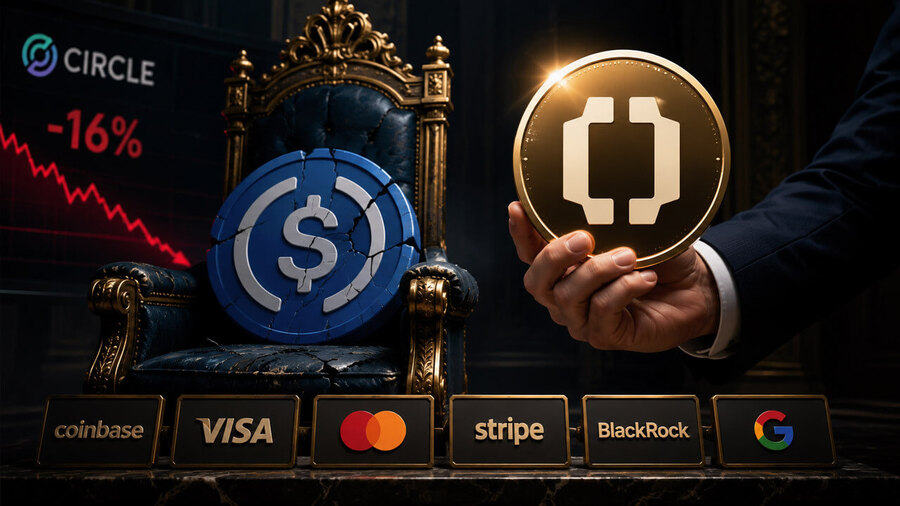
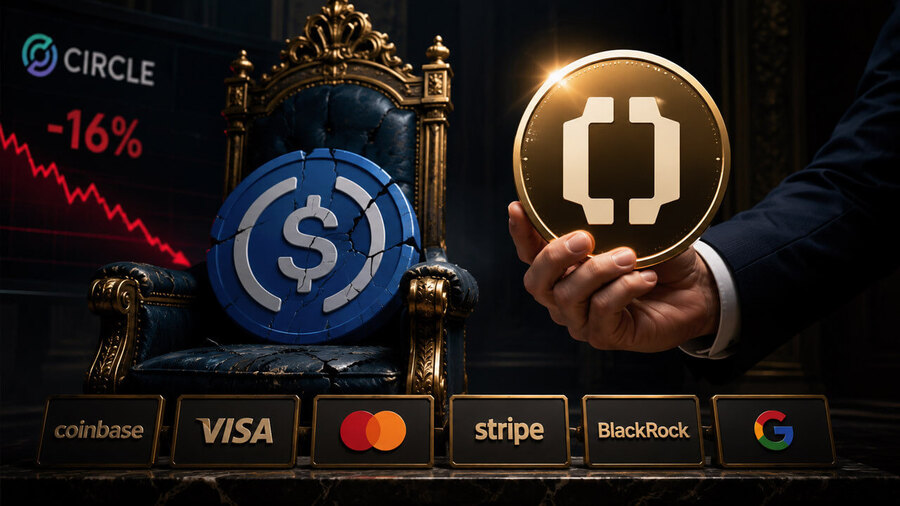
This shift has paved the way for Open USD (OUSD), a new stablecoin project backed by more than 140 companies across the financial, technology, and crypto sectors. Its supporters include Coinbase, Visa, Mastercard, Stripe, BlackRock, and Google.
OUSD offers fee-free minting and redemption for businesses. In addition, it plans to distribute most of the reserve income to partners that help drive stablecoin adoption.
For Circle, the issuer of USD Coin (USDC), Coinbase’s support for OUSD is particularly significant. Coinbase has long been one of USDC’s most important distribution partners. According to the exchange’s first-quarter report, more than 25% of USDC in circulation, or approximately US$19 billion, was held across Coinbase’s products. Meanwhile, its layer-2 network, Base, processed around 62% of global on-chain stablecoin transaction volume during the same period.
As a result, Coinbase’s involvement in OUSD is more than just a symbolic endorsement. It positions the exchange within a new stablecoin model that could emerge as a competitor to USDC.
Distribution Becomes the New Battleground
The launch of OUSD presents a fresh challenge to the stablecoin market, which currently has a market capitalization exceeding US$320 billion.
For years, stablecoin issuers such as Circle and Tether have enjoyed substantial profits by retaining all interest income generated from their reserve assets. However, companies with direct access to users are now demanding a fairer share of that revenue.
To address this, OUSD eliminates minting and redemption fees while distributing most of its reserve income to distribution partners.
The market reacted immediately. Circle’s shares fell 16% following the announcement of the OUSD consortium, reflecting investor concerns over the future of Circle’s commercial relationship with Coinbase.
That partnership has been highly profitable. In 2024, Circle paid approximately US$908 million to Coinbase under their USDC revenue-sharing agreement. In 2025, Coinbase generated roughly US$1.35 billion in stablecoin-related revenue, accounting for around 19% of its total annual revenue.
The distribution agreement between Circle and Coinbase is set to expire in August 2026. According to Tiger Research, Coinbase’s role as a founding member of OUSD strengthens its negotiating position ahead of contract renewal.
Coinbase CEO Brian Armstrong said only that the company aims to accelerate stablecoin adoption and modernize the global financial system. Behind that statement, however, it is becoming increasingly clear that distribution platforms want a larger share of the economics generated by the stablecoin business.
Circle Defends the USDC Model
Circle CEO Jeremy Allaire believes that the success of a stablecoin depends not only on revenue sharing but also on the strength of the network built over many years.
In a post on X, Allaire said USDC processed nearly US$30 trillion in on-chain transactions during the first quarter of 2026. According to Artemis data, this represented around 80% of all U.S. dollar-denominated stablecoin transactions across major blockchains.
Allaire also questioned the effectiveness of a consortium involving such a large number of major companies. He argued that large groups often have conflicting interests, resulting in slower decision-making and reduced innovation.
He revealed that Circle experimented with a consortium model during USDC’s early development but ultimately found that smaller, more flexible partnerships delivered better results.
In addition, Allaire emphasized that reserve income cannot be fully distributed to partners. A portion must be retained to fund global licensing, regulatory compliance, and 24/7 reserve management.
OUSD Still Faces Major Challenges
Despite backing from many large corporations, analysts believe OUSD still faces significant hurdles to achieving widespread adoption.
Lorenzo Valente, Director of Digital Asset Research at ARK Invest, said any new stablecoin must overcome a difficult starting point, as the market is already dominated by USDT and USDC. Building liquidity from scratch, he noted, is far from easy.
Valente also questioned the effectiveness of a consortium made up of hundreds of companies, arguing that decision-making could be much slower than at Circle or Tether, where strategic decisions can be made independently.
In addition, OUSD could attract closer scrutiny from regulators and antitrust authorities due to the involvement of major companies across multiple industries.
Meanwhile, several consortium members continue to pursue their own stablecoin strategies. Stripe, for example, has acquired stablecoin infrastructure provider Bridge, while Ripple has launched its own stablecoin. Several major banks are also developing proprietary tokenized deposit systems.
As a result, the long-term commitment of OUSD’s members remains uncertain.
Kayla Phillips, a blockchain investor at Hivemind, questioned how more than 140 consortium members could establish an effective governance structure. She argued that if not all participants have a meaningful role in decision-making, their incentives to remain actively involved may weaken.
Stablecoin Competition Enters a New Phase
The emergence of OUSD shows that competition in the stablecoin sector is no longer focused solely on technology but increasingly on how economic value is shared across the ecosystem.
For Circle, maintaining USDC’s market position will require continued investment in value-added services such as the Cross-Chain Transfer Protocol (CCTP) and institutional solutions that provide utility beyond simply issuing stablecoins.
Going forward, competition in the stablecoin industry is expected to center on which players control distribution networks and how reserve income is allocated among ecosystem participants.