The Debate Over the UK’s Digital Pound Has Become a Battleground for the Crypto Industry’s Political Influence

Probe Into Farage Shifts UK Digital Pound Debate to Crypto’s Political Influence
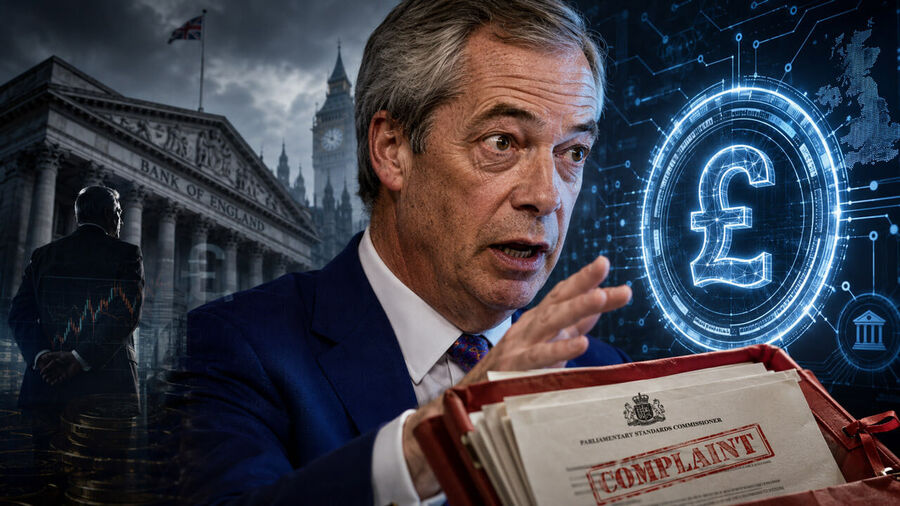
A request to investigate Nigel Farage’s alleged interactions with the Bank of England has shifted the debate over the UK’s proposed digital pound into a broader discussion about who gets to influence the country’s future public payment infrastructure. The case has also renewed scrutiny over political donations from individuals with ties to the crypto industry.
According to a July 2 report by The Guardian, Labour MP Phil Brickell asked the Parliamentary Commissioner for Standards to examine Farage’s reported interactions with the Bank of England. The request followed an earlier report claiming Farage said at a crypto event that he had challenged Bank of England Governor Andrew Bailey over the central bank’s digital pound project.
So far, no findings of wrongdoing have been made against Farage. The Parliamentary Commissioner for Standards says the matter is still in the fact-finding stage before any decision is reached.
Farage is also facing a separate investigation over an alleged breach of Rule 5 on registering interests, which was opened on May 13, 2026. Meanwhile, the July 2 complaint remains a formal request and has not become an official lobbying investigation.
The case brings together three major policy issues currently under discussion in the UK: the development of a digital pound, stablecoin regulation, and rules governing political donations linked to the crypto sector.
Why the Complaint Matters
The digital pound remains a proposal, and the Bank of England has not decided whether it will be launched. If introduced, it would not replace cash and would be a central bank-issued digital currency rather than a cryptocurrency.
In its October 2025 update, the Bank of England and HM Treasury said the design phase will continue through 2026. A blueprint and evidence-based assessment will be completed before any decision is made. If the project moves forward, Parliament would still need to approve it through legislation.
This makes the current stage particularly important, as the Bank continues to gather feedback, test technology, operate the Digital Pound Lab, and consult with industry participants, academics, civil society groups, and other stakeholders.
The complaint against Farage comes during this consultation period. Earlier reports said Farage and Reform UK MP Richard Tice met with Governor Andrew Bailey in September 2025. Farage later said he questioned the Bank’s digital pound plans during a crypto event.
The Bank of England said the meeting was part of its regular engagement with political representatives and acknowledged that Farage holds different views on the digital pound.
However, the issue has become more politically sensitive because Farage leads a party that has received significant donations from supporters with interests in the crypto industry. The policies under discussion could also shape the balance between privately issued stablecoins and central bank digital money.
Previously, the debate focused mainly on privacy, government surveillance, the future of cash, and concerns that a central bank digital currency could expand state oversight of personal payments. Now, another question has emerged: who gets privileged access to influence policy while the digital pound is still being designed?
In its latest update, the Bank of England described the future payments system as a “multi-money” ecosystem where people could use cash, bank deposits, stablecoins, tokenized assets, and potentially a digital pound with equal value.
As a result, the debate is no longer only about whether the UK should launch a digital pound, but also about who has influence over the future of public money in a digital economy.
Digital Pound vs. Stablecoins
A digital pound would be public money issued by the central bank. Stablecoins, by contrast, are privately issued digital assets that can be used for payments and settlement if supported by sufficient reserves, redemption mechanisms, and regulatory oversight.
As digital payments become more widespread, policymakers must decide how much room should be given to private stablecoins, what restrictions should apply, and whether public payment infrastructure should complement or compete with them.
CryptoSlate has previously reported on Reform UK’s opposition to proposed stablecoin restrictions and scrutiny surrounding a Reform donor linked to Tether. The latest controversy raises a broader question: can crypto wealth, political donations, and access to central bank policymakers be clearly separated to maintain public trust in the policymaking process?
This sets a higher standard than ordinary political disagreement. Farage is free to oppose a digital pound on ideological or economic grounds, while Reform UK can argue that stablecoins are more supportive of innovation than central bank digital currency.
Likewise, crypto industry participants are entitled to lobby against policies they believe could hinder growth. The concern arises when those policy positions overlap with significant financial backing and direct access to officials responsible for designing the UK’s payment infrastructure.
Crypto Donation Rules Continue to Evolve
The UK is also updating its political finance rules to reflect the growth of digital assets. Guidance from the Electoral Commission states that cryptoassets are treated as property rather than currency. Political parties may accept crypto donations, but they must verify donors, confirm their eligibility, value donations in pounds sterling, and report them in accordance with existing rules.
The Electoral Commission has also warned that cryptoassets create additional challenges in identifying donors and verifying the source of funds.
In response, the UK government has proposed stricter rules. In a March 25 announcement, it said it plans to limit donations from registered overseas voters and ban cryptocurrency donations until regulations are in place to prevent the use of untraceable funds in political financing.