
Stanford Study Flags Alleged Bitcoin Market Manipulation on Polymarket
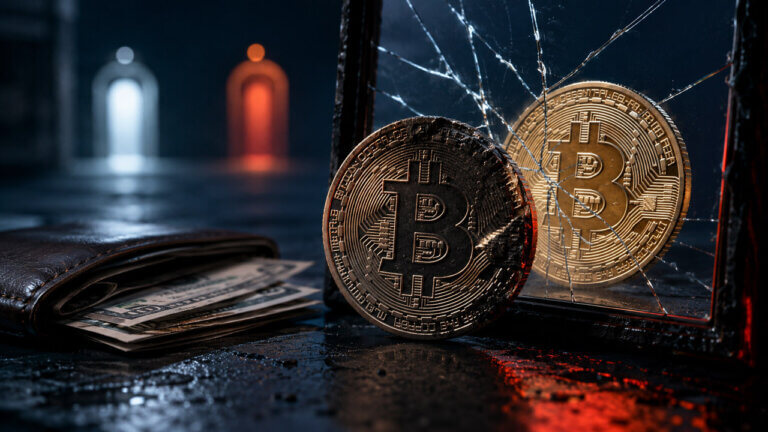
A recent study by Stanford University and Singapore Management University suggests that Polymarket’s five-minute Bitcoin prediction markets may have given sophisticated traders an unfair advantage. After analyzing nearly 16,000 Bitcoin prediction contracts over a two-month period, researchers identified trading patterns that point to possible Bitcoin price manipulation just before contract settlement.
The findings suggest that some market participants may have briefly influenced Bitcoin’s spot price to profit from prediction contracts.
How the Alleged Manipulation Worked
Polymarket’s five-minute prediction contracts allow users to bet on whether Bitcoin (BTC) will finish above or below a specified price level. Contract outcomes are determined using a single Chainlink price feed at one specific point in time.
According to the study, traders holding large positions allegedly executed concentrated trades in the final seconds before settlement. These trades may have temporarily pushed Bitcoin’s spot price in a direction that favored their positions.
Researchers identified 821 suspected participants who may have engaged in this practice. They are estimated to have earned approximately US$8.2 million during the study period. In addition, around US$1.28 million is estimated to have been effectively transferred from ordinary traders to these participants as a result of the alleged manipulation.
The study also found that Binance’s Bitcoin trading volume surged to nearly 3.9 times its normal level during settlement windows. Interestingly, Bitcoin’s price often returned to its previous level just seconds after the contracts expired.
However, the researchers emphasized that they have no direct evidence linking Binance trading accounts to Polymarket wallets. As a result, the evidence remains circumstantial rather than conclusive.
Proposed Solutions
The researchers found that the manipulation risk declined significantly when contract durations were extended from five minutes to 15 minutes.
They also recommended using Time-Weighted Average Price (TWAP) as the settlement mechanism instead of relying on a single price snapshot. This approach would make it much more difficult for traders to influence contract outcomes through brief price spikes.
In response to the report, Polymarket said it does not believe market manipulation occurred. However, the platform confirmed plans to introduce average-price settlement for certain markets within the next year.
Meanwhile, Binance stated that it continuously monitors trading activity on its platform but has no control over how third-party prediction markets such as Polymarket determine their settlement mechanisms.
Implications Beyond the Crypto Industry
The researchers argue that the issue extends beyond cryptocurrency markets. Event contracts offered by firms such as Cboe and Nasdaq could face similar settlement risks if they rely on a single price snapshot.
The findings come as prediction markets continue to experience rapid growth. According to DefiLlama, Kalshi processed approximately US$9.4 billion in trading volume in June, while Polymarket International recorded around US$4.3 billion.
The expanded 2026 FIFA World Cup was a major driver of activity, generating more than US$5.4 billion in combined trading volume. Of that total, Polymarket accounted for roughly US$4.25 billion, while Kalshi contributed about US$1.2 billion.
The researchers believe that adopting more robust settlement mechanisms could make prediction markets significantly harder to exploit while improving overall market integrity.
At the same time, prediction markets are facing increasing regulatory scrutiny. Several U.S. states have challenged platforms such as Kalshi and Polymarket, while the Commodity Futures Trading Commission (CFTC) maintains that it has primary authority over federally regulated event contracts. The legal dispute is currently before federal courts and could ultimately reach the U.S. Supreme Court.